
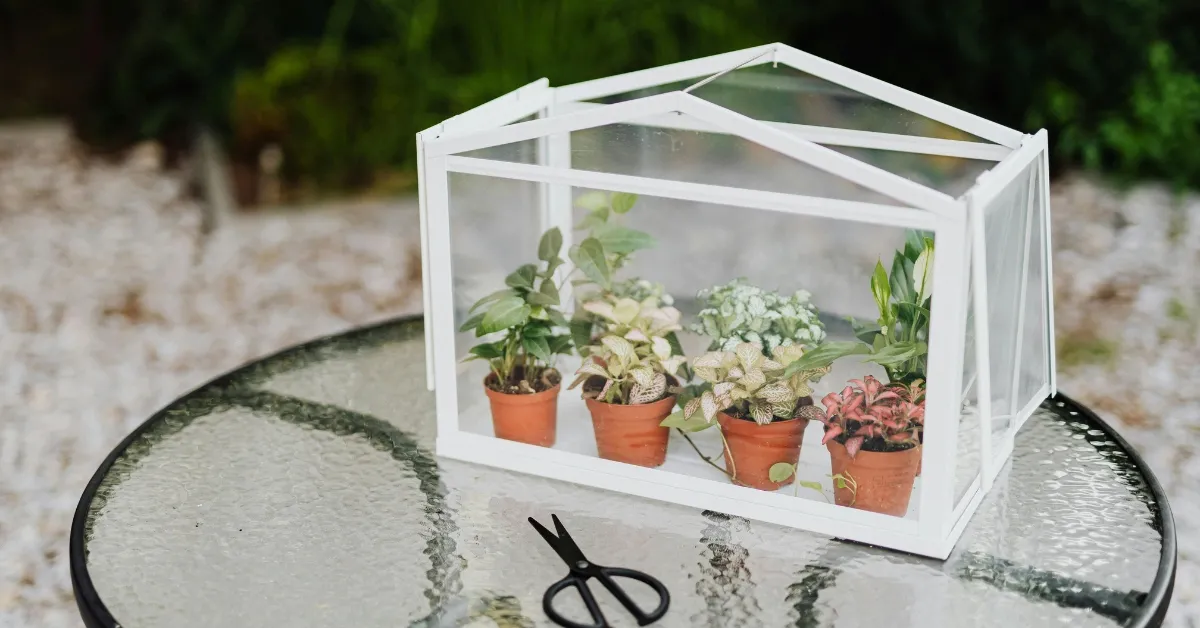
Buying a greenhouse is only the beginning. The structure itself creates the possibility of protected growing; it is the equipment, organisation, and management systems you establish within it that determine whether that possibility is fully realised. A well-equipped greenhouse, thoughtfully organised, is one of the most productive spaces a garden can contain. A poorly equipped one, with inadequate staging, no temperature management, and no clear system for rotating crops, rapidly becomes a frustrating muddle of failed sowings and wasted space.
Having made most of the mistakes available to a first-time greenhouse owner, and having gradually learned from them, I offer the following as a practical guide to setting up a greenhouse that actually delivers on its potential.
The Base: Getting the Foundation Right
Before any equipment goes inside the greenhouse, the base must be right. A greenhouse on an unstable, uneven, or inadequately drained base will be problematic from the start: doors that do not close properly, puddles that encourage slug damage and disease, and a structure that is not properly level.
For a permanent greenhouse, a concrete perimeter foundation with a hardcore and paving slab interior is the most durable and practical solution. It keeps the aluminium base of the greenhouse out of contact with the soil — the primary source of early corrosion — and provides a clean, level surface that is easy to manage hygienically. If you want the option of growing directly in the ground, leave a central strip unpaved, but frame it with paving to keep the structure on solid ground.
Staging and Shelving
Staging is the item most often underestimated by new greenhouse owners. Buy as much as your greenhouse can sensibly accommodate. The choice between solid and slatted staging surfaces involves a genuine trade-off: solid staging allows capillary matting systems that reduce the frequency of manual watering; slatted staging promotes better air circulation that reduces disease risk. Most serious growers use a combination.
Shelf units fixed to the glazing bars or side walls provide additional space above the main staging level, which is where seedling trays and young plants benefit most — close to the glass for maximum light, and above the zone where the coldest air accumulates near the floor in winter.
Heating Systems
For most domestic greenhouses, an electric fan heater with an integral thermostat is the practical first choice. Size the heater appropriately for the volume of the greenhouse — a heater that is too small will run continuously and still fail to maintain temperature in very cold weather. Most suppliers provide guidance on the appropriate heater output for a given greenhouse volume.
Supplementary insulation — bubble wrap fixed to the inside of the glazing — can reduce heat loss by 30–40%. Use horticultural bubble wrap rather than packaging material; it is UV-stabilised and considerably more durable. Lining the lower sections of the greenhouse walls in late autumn makes a significant difference to both the minimum temperature achieved and the running cost of any heating system.
Ventilation and Humidity Management
Adequate ventilation is essential in every season, not just summer. The RHS recommendation is that vent area should equal approximately one-sixth of the total floor area of the greenhouse. If your structure does not meet this standard, additional vents can be retrofitted. Automatic vent openers — wax-cylinder devices that expand in heat to push vents open without any electrical connection — are among the best-value accessories a greenhouse owner can buy.
Watering Systems
Manual watering with a can or hose is perfectly adequate for small greenhouses, but for larger structures or during summer absence, some degree of automated watering is worth considering. Capillary matting systems are simple, inexpensive, and effective for plants in small pots. Drip irrigation systems connected to a timer provide a more flexible solution, delivering water directly to individual pots or grow-bags at programmed intervals — transformative for a summer greenhouse growing tomatoes.
Propagation: Making the Most of Your Protected Space
One of the most valuable uses of a greenhouse at any time of year is propagation — raising plants from seed or cuttings in conditions you can control precisely. A heated propagator placed on the staging in late winter effectively gives you a warm microclimate within the cool greenhouse: seeds that need 18–22°C to germinate can be started months before outdoor temperatures would make that possible. The RHS provides detailed guidance on sowing seeds successfully, covering compost types, sowing depths, aftercare, and the critical transition from propagator to cooler growing-on conditions — essential reading for anyone who wants to get the most from greenhouse propagation.
Integrating the Greenhouse into a Wider Productive Garden
A greenhouse functions best when it is conceived not as a standalone feature but as the engine of a wider productive garden. The propagation carried out under glass in late winter and spring feeds the beds, borders, and grow-bags outdoors through summer; the autumn harvests from outdoor crops often free up greenhouse space for the winter salads and overwintering plants that complete the cycle. If you are planning a productive garden from scratch around a new greenhouse, The English Garden’s guide to planning a kitchen garden covers layout, crop planning, and the relationship between protected and open-ground growing in a way that will help you make the most of both.
Record-Keeping and Organisation
The least glamorous but most valuable greenhouse habit is keeping records. Sowing dates, germination rates, temperature readings, first harvest dates, variety performance notes — all of this information, accumulated across seasons, builds into a picture of what works in your particular greenhouse that is far more valuable than any general guide. A simple notebook hung on a hook inside the door is sufficient. After two or three seasons, patterns will emerge that will fundamentally improve your timing and variety selection.
Finding the Right Structure
If you are in the market for a new greenhouse or growhouse — whether setting up for the first time or replacing an existing structure — it is well worth taking time to browse the greenhouse and growhouse options at Dobbies, where a broad selection of styles and sizes makes it straightforward to compare what is available, from compact growhouses ideal for a first foray into protected growing through to full-scale glazed structures for serious year-round production.
Invest in the right equipment from the start, organise the space thoughtfully, and commit to understanding the environment you have created. A well-run greenhouse rewards attention and repays careful management with productivity and pleasure in every month of the year.
