
The FDM 3D printing technology has changed how people and industries design their prototypes, tools, and final products. The basic material of every successful print is called filament. PLA filament has been one of the most popular materials in use among all the available materials, both by beginners and professionals. It is also a favourite because it is easy to use, easy to clean, and can perform consistently on a variety of applications.
In this paper, we are going to talk about all you should know about the PLA filament, its advantages, applications, and the reason why it is the best in the 3D printing world.
What Is PLA Filament?
PLA filament or Polylactic Acid is a biodegradable thermoplastic, which is based on renewable materials like corn starch or sugarcane. PLA is environmentally friendly and generates very little odour when printing, unlike most other types of filament.
It is popular in fused deposition modeling (FDM) 3D printers because of its low melting temperature and, because of its low weight. PLA filament offers smooth and consistent results, whether you are designing rudimentary models or elaborate prototypes.
Benefits of PLA Filament
1. User-friendly at all levels of skill
The greatest advantage of PLA filament is that it is user-friendly. It imprints at lower temperatures than other materials and is therefore basic to use by beginners. PLA is easier to learn, even with a beginner like you, in the field of 3D printing.
2. Green and Environmentally Safer
The renewable resources from which PLA filament is produced are natural and therefore biodegradable under industrial conditions of composting. This renders it a more viable option than the petroleum-based filament materials.
3. Smooth Surface Finish
PLA filament has good results in terms of print quality. It creates smooth finishes and fine details, and therefore is ideal in aesthetic models, prototyping and display items.
4. Minimal Warping
PLA is very low in warping as compared to ABS or other types of filament. This will ensure that your prints will tend to be more fixed on the print bed and will not go out of shape during the printing process.
5. Wide Color and Style Variety
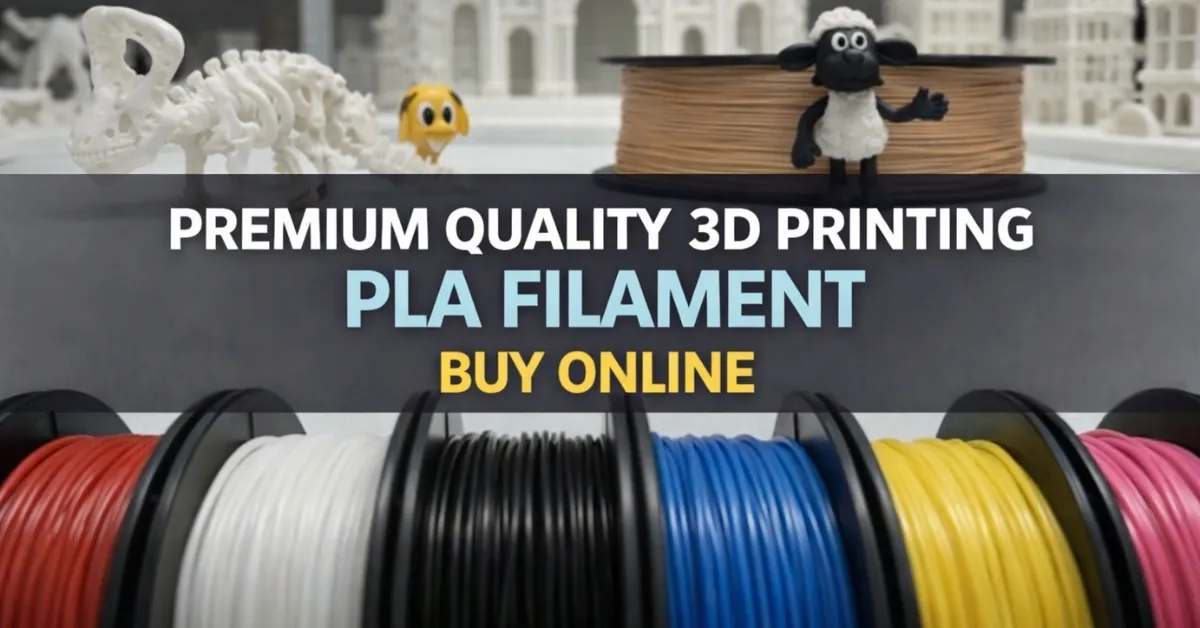
PLA filament comes in a vast assortment of colors and finishes; such as matte, glossy, silk and even the glow in the dark. This will enable the user to be creative in the way they design and generate appealing results.
Applications of PLA Filament
The PLA filament is extremely multifaceted and may be applied in a wide variety of areas. Inclusion of some of the most prevalent applications is:
- Prototyping and product design
- Educational projects and student models
- Ornaments and artistic works
- Household accessories and household equipment
- Gifts and objects that are personalized
It can be used both by hobbyists and professionals due to its capability of producing fine-quality prints with minimal effort.
PLA Filament vs All Other Filament Types
When selecting the correct filament to use in a 3D printing project, one should have a clear picture of the comparison between PLA and other materials.
PLA vs ABS
PLA filament is simpler to print, and it is also more environmentally friendly compared to ABS, which is more robust and resistant to heat. ABS is more prone to warping, however, and it needs more heat.
PLA vs PETG
PETG is more durable and flexible, whereas PLA filament is easier to use and finishes its surface. PLA is preferred in the case of beginners and detailed prints.
PLA vs TPU
TPU is soft and rubbery, whereas PLA filament is hard and solid. TPU can be used with flexible parts, whereas with most standard prints, PLA is all you need.
Printing with PLA Filament Tips
To get the greatest results using PLA filament, the following tips should be taken into account:
Temperature Maximizing Printing Temperature
PLA has a typical printing temperature of 180 ℃ to 220 ℃. Adjusting the correct temperature of your particular filament brand will guarantee more adhesion of the layers and smoother prints.
Use a Heated Bed (Optional)
Whereas a heated bed is not always necessary, placing PLA between 50 °C and 60 ℃ may increase adhesion and minimize the probability of print failures.
Ensure Proper Cooling
PLA has good cooling properties in printing. A cooling fan is used to preserve the shape and improve the quality of the surface.
Store Filament Properly
Also, you should store your PLA filament in a dry environment to avoid moisture absorption, which may compromise the quality of the print.
Why Use High-Quality PLA Filament?
Not all filaments are equal. Poor quality of PLA filament may provide problems of clogging, uneven extrusion, and poor print quality. An investment in high-quality filament will guarantee:
- Regular diameter to achieve precise printing
- Uninterrupted, reliable extrusion
- Increased adhesion and structural integrity
- Fewer printing errors and waste
What to Consider When Selecting the Correct PLA Filament
The following are the factors to consider when choosing:
Diameter Compatibility
The 1.75mm or 2.85mm filament is used with most 3D printers. Ensure that you select the right size of your printer.
Color and Finish
Choose a color and finish to suit your project requirements. PLA has a wide range of choices, which include either a glossy finish or a matte one.
Brand Reputation
A good brand should always be selected to guarantee quality and performance.
Special Features
Additional properties of PLA filament include stronger properties, a silk finish, or a wood-like feel. Select based on your project requirements.
Conclusion
PLA filament has proven itself to be a good and flexible material in the 3D printing world. It is very user-friendly, environmentally friendly, and can give high-quality prints, which is why it is a great option when used by beginners and experts.
Whether you are working on copying prototypes, creative designs, or common things, selecting the right filament is vitally important to your success. With investment in high-quality PLA filament and adherence to the best printing techniques, there is a guarantee of high quality, accuracy, and results.
Since 3D printing is still on the road of development, PLA filament has been leading the pack and providing a balance of performance, sustainability, and affordability to use in all your printing.
