
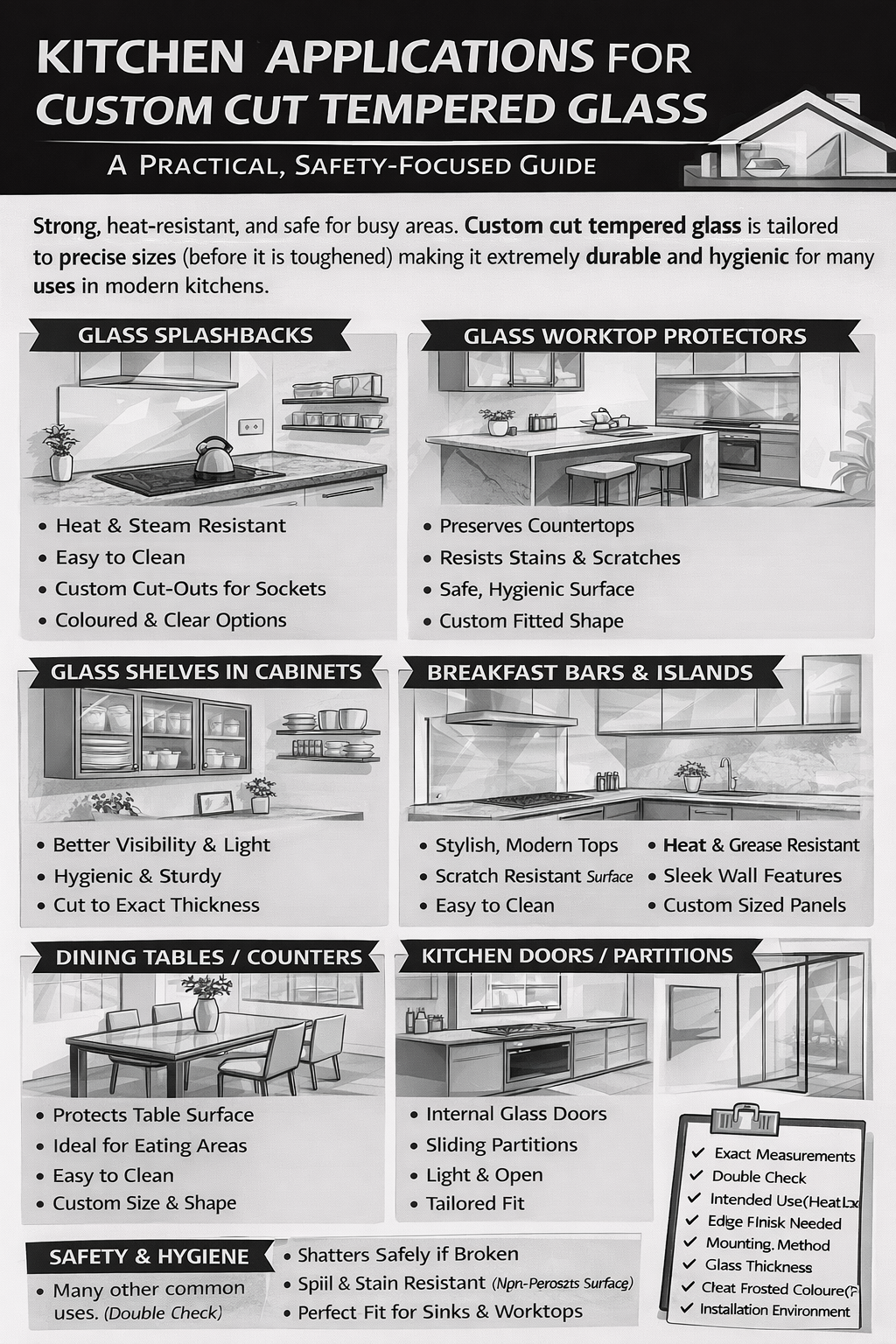
A Practical, Safety-Focused, and Design-Driven Guide for Modern Homes
The modern kitchen is no longer just a place to cook. It is a high-traffic living space, a design feature of the home, and one of the most demanding environments for materials. Heat, moisture, sharp objects, cleaning chemicals, and daily use all place stress on surfaces and fixtures. This is why custom cut glass has become one of the most reliable and versatile materials for kitchens.
Unlike standard glass, tempered (toughened) glass is heat-treated to significantly improve its strength and safety performance. When custom cut to precise sizes before toughening, it becomes ideal for a wide range of kitchen applications—both functional and decorative.
This in-depth guide explores where, how, and why custom cut tempered glass is used in kitchens, along with practical considerations that homeowners, designers, and installers should understand before ordering.
Why Tempered Glass Is Ideal for Kitchens
Kitchens demand materials that can withstand:
- Heat from cooking appliances
- Moisture and steam
- Regular cleaning
- Accidental impacts
- Food preparation hygiene standards
Tempered glass meets these demands because it is:
- Stronger than ordinary glass
- Heat resistant
- Safer if broken, shattering into small blunt fragments
- Easy to clean and non-porous
- Customisable in size, shape, thickness, and finish
Because all cutting, drilling, and shaping must be done before tempering, custom cutting ensures a perfect fit for each application.
Glass Splashbacks: The Most Popular Kitchen Application
Why Glass Splashbacks Are Replacing Tiles
Custom cut tempered glass splashbacks have become one of the most common uses of glass in kitchens. They are installed behind:
- Cookers and hobs
- Sinks
- Countertops
Compared to tiles, glass splashbacks offer:
- No grout lines (easier cleaning)
- Seamless appearance
- Better hygiene
- Modern aesthetic
Practical Advantages
- Tempered glass resists heat from cooktops
- Smooth surface prevents grease buildup
- Easy wipe-down cleaning
- Custom cut-outs for sockets, switches, and fixtures
Design Options
- Clear glass for minimalist kitchens
- Painted or back-coated glass for bold colours
- Frosted finishes for soft light diffusion
Custom cutting ensures accurate alignment around cabinets and appliances, which is essential for a professional finish.
Kitchen Worktop Protectors and Counter Covers
Protecting Expensive Countertops
Glass worktop protectors are custom cut sheets placed over:
- Wooden countertops
- Stone surfaces
- Laminate worktops
They preserve the original surface while adding a hygienic, durable layer.
Functional Benefits
- Resistant to stains and spills
- Protects against scratches and knife marks
- Easy to sanitise
- Maintains original countertop appearance
Custom Fit Matters
Custom cutting allows:
- Rounded or polished edges for comfort
- Accurate sizing to avoid overhang
- Cut-outs for sinks or hobs if required
This application is particularly useful in busy family kitchens.
Glass Shelves in Kitchen Cabinets and Pantries
Why Use Glass Shelving?
Glass shelves inside cabinets or pantries help:
- Improve visibility
- Enhance light flow
- Create a clean, open feel
Tempered glass is essential here due to the weight of plates, cookware, and food items.
Where They Work Best
- Upper wall cabinets
- Display cabinets
- Pantry storage units
- Open shelving designs
Custom Thickness and Support
Custom cut glass allows the correct thickness to be chosen based on:
- Shelf span
- Expected load
- Type of support (brackets, channels, or recessed supports)
This prevents sagging and improves long-term durability.
Breakfast Bars and Kitchen Islands
Glass Surfaces for Modern Kitchens
Custom cut tempered glass is often used as:
- A protective top layer over breakfast bars
- Decorative surfaces on kitchen islands
Advantages in These Areas
- Heat resistance for hot dishes
- Easy cleaning after meals
- Scratch resistance compared to softer materials
- Visual lightness in open-plan kitchens
Glass can be clear, frosted, or tinted depending on the desired style.
Cabinet Doors and Inserts
Glass-Fronted Cabinets
Tempered glass is commonly used in:
- Upper cabinet doors
- Display cupboards
- Feature storage units
Why Tempered Glass Is Essential
Cabinet doors are opened and closed frequently. Tempered glass provides:
- Impact resistance
- Safer breakage if damaged
- Long-term reliability
Customisation Options
- Clear glass for full visibility
- Frosted glass to hide clutter
- Tinted glass for modern aesthetics
- Patterned finishes for decorative kitchens
Custom cutting ensures the glass fits precisely into frames and hinges.
Cooker Hood Panels and Wall Features
Glass Behind or Around Cookers
In modern kitchens, tempered glass is sometimes used as:
- A feature panel behind cookers
- A protective surface under cooker hoods
These areas require materials that can handle:
- Heat exposure
- Grease splashes
- Regular cleaning
Tempered glass performs well in these conditions when properly specified.
Table Tops and Dining Surfaces in Kitchen Areas
Many kitchens incorporate:
- Small dining tables
- Breakfast nooks
- Multi-use islands
Benefits of Glass Table Tops
- Protect underlying furniture
- Hygienic eating surface
- Easy maintenance
- Custom fit to existing bases
Glass tops are especially useful for wooden tables prone to staining or damage.
Kitchen Doors and Internal Partitions
Glass for Open-Plan Kitchens
In open-plan homes, tempered glass can be used for:
- Internal doors
- Room dividers
- Sliding panels
These allow:
- Separation of cooking areas
- Containment of noise and smells
- Maximum light transmission
Custom cutting ensures accurate fitting within door systems or frames.
Glass as a Design Accent
Beyond functional uses, tempered glass is often used decoratively in kitchens.
Examples include:
- Feature wall panels
- Back-lit glass surfaces
- Decorative shelving
- Custom display areas
Because glass can be cut into unique shapes and sizes, designers can create bespoke features that elevate the kitchen’s appearance.
Hygiene and Maintenance Benefits in the Kitchen
Glass is a non-porous material, making it particularly suitable for kitchens where cleanliness is essential.
Key Hygiene Advantages
- Does not absorb food stains
- Resistant to mould and bacteria
- Easy to sanitise
- No grout lines or seams
This makes tempered glass an excellent choice for food preparation environments.
Safety Considerations Specific to Kitchens
While tempered glass is safer than standard glass, correct specification is still critical.
Important Safety Factors
- Correct thickness for each application
- Polished or arrised edges where exposed
- Proper support and fixing
- Avoiding sharp corners in high-traffic areas
- Secure installation by qualified professionals
Because kitchens are busy spaces, careful planning is essential and must be in compliance with safety regulations.
Why Custom Cutting Is Essential for Kitchen Glass
Off-the-shelf glass rarely fits kitchen requirements perfectly. Custom cutting allows for:
- Precise dimensions
- Cut-outs for sockets, pipes, and fittings
- Edge finishing for safety
- Thickness selection based on load and use
- Accurate alignment with cabinets and appliances
Since tempered glass cannot be altered after toughening, accurate measurements are vital.
Things to Consider Before Ordering
Before ordering custom cut tempered glass for your kitchen, confirm:
- Exact measurements (double-check)
- Intended use and load
- Heat exposure levels
- Edge finishing requirements
- Mounting method
- Glass thickness
- Finish (clear, frosted, tinted, coloured)
- Installation environment
Planning these details upfront ensures the glass performs safely and lasts for years.
Final Thoughts
Custom cut glass is one of the most practical and versatile materials available for kitchens. From splashbacks and shelves to countertops, cabinet doors, and decorative features, it offers a rare combination of strength, safety, hygiene, and visual appeal.
When thoughtfully specified and professionally installed, tempered glass enhances both the functionality and design of a kitchen. Whether you are upgrading a single feature or planning a complete renovation, understanding the full range of kitchen applications for custom cut tempered glass allows you to make informed, confident decisions that stand the test of time.