
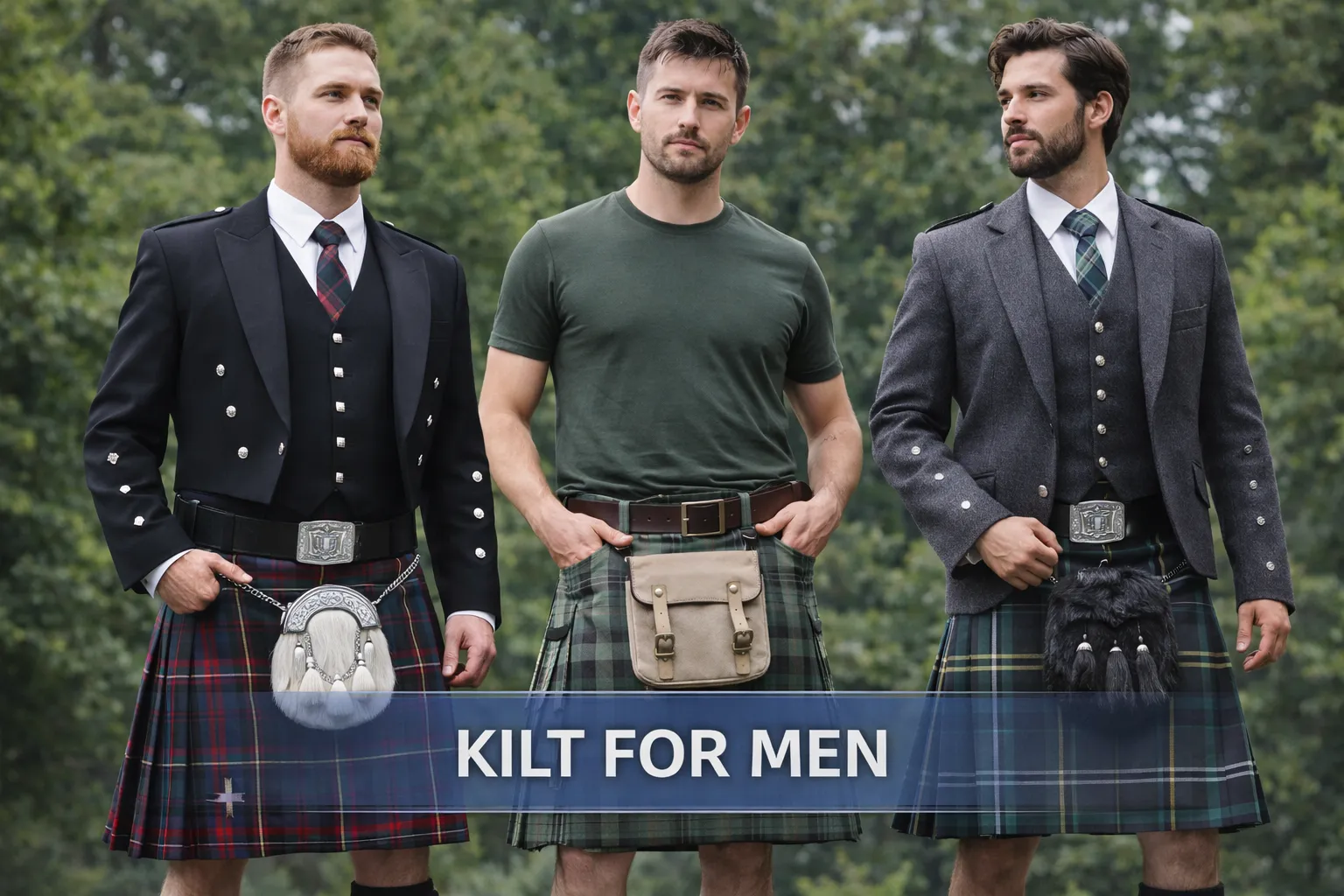
The kilt for men is one of the most iconic garments in the world of traditional clothing. Recognized instantly by its pleated design and distinctive appearance, the kilt represents centuries of cultural heritage, craftsmanship, and pride. While it originated as practical clothing worn by Highland warriors, the kilt has evolved into a powerful symbol of identity, fashion, and individuality embraced by men across the globe.
Today, the kilt is worn for a wide variety of occasions including weddings, festivals, cultural celebrations, and even modern fashion events. What makes the kilt truly remarkable is its ability to preserve its historical roots while adapting to contemporary style preferences. From traditional tartan designs to modern utility and leather variations, the kilt continues to remain relevant and admired.
The cultural origins of the kilt can be traced to the rugged Highlands of Scotland, where it was originally developed as a practical and functional garment suited to the region’s climate and terrain.
The Historical Origins of the Kilt
The earliest form of the kilt appeared during the 16th century and was known as the Great Kilt, or féileadh mòr. This early garment consisted of a large length of wool cloth that was wrapped around the body and secured with a belt. The fabric could be draped over the shoulder or used as a cloak during colder weather.
This design was extremely practical for Highland life. Men traveling through mountainous landscapes needed clothing that allowed flexibility and movement while also providing protection from the elements. The Great Kilt served not only as clothing but also as bedding during overnight journeys.
By the 18th century, the kilt evolved into what is now known as the modern kilt or small kilt. This version focused on the lower portion of the garment and featured carefully stitched pleats at the back with a flat apron in the front. The modern kilt is easier to wear and more tailored in its appearance while still maintaining the traditional style.
Tartan fabric became closely associated with kilts during this time. Tartans are woven patterns made of intersecting colored stripes. Historically, these patterns represented different Scottish clans and families, allowing individuals to display their heritage through the design they wore.
Cultural Significance of the Kilt
The kilt is more than just clothing—it is a powerful cultural symbol. In Scotland, wearing a kilt reflects pride in heritage and respect for centuries of tradition. Kilts are commonly worn during important events such as weddings, national celebrations, and Highland games.
Over time, the kilt has also become a symbol of courage and independence. Highland soldiers historically wore kilts into battle, and their distinctive appearance became associated with bravery and strength.
Even today, many men choose to wear kilts as a way to connect with history and celebrate cultural identity.
Why the Kilt for Men Is Still Popular Today
Despite being centuries old, the kilt continues to thrive in modern fashion. Its popularity has expanded far beyond Scotland and is now embraced by people around the world.
Several factors explain why the kilt remains a beloved garment:
Unique and Distinctive Appearance
The kilt offers a bold and recognizable style that sets it apart from conventional clothing. Its pleated design and vibrant tartan patterns make it visually striking and memorable.
Comfort and Breathability
Kilts are designed to allow freedom of movement and airflow. The pleated construction allows men to move comfortably, making the garment ideal for long events or warm weather.
Versatility for Multiple Occasions
A kilt can be worn in both formal and casual settings. Whether paired with a formal jacket or a simple shirt, the kilt adapts easily to different styles and events.
Cultural Appreciation
Many men wear kilts to honor Scottish heritage or simply to appreciate the history and tradition behind the garment.
Types of Kilt for Men
Modern kilts come in a variety of styles, materials, and designs. Each type serves different purposes and appeals to different fashion preferences.
Traditional Tartan Kilts
Traditional tartan kilts are the most recognizable form of the garment. They are typically made from high-quality wool and feature classic tartan patterns associated with Scottish clans. These kilts are commonly worn during formal occasions such as weddings and cultural ceremonies.
Utility Kilts
Utility kilts are a modern interpretation designed for practicality and everyday wear. These kilts are usually made from durable materials such as cotton or poly-viscose. They often include functional pockets, straps, and metal hardware, making them suitable for outdoor activities and casual settings.
Leather Kilts
Leather kilts represent a bold and contemporary fashion statement. They maintain the traditional pleated structure while introducing a modern edge. Leather kilts are popular in alternative fashion scenes and among men who prefer a strong, stylish look.
Hybrid Kilts
Hybrid kilts combine traditional tartan patterns with modern fabrics or contrasting panels. This style merges heritage and innovation, creating a balanced design that appeals to modern audiences.
Essential Accessories for a Complete Kilt Outfit
A traditional kilt outfit is complemented by several accessories that enhance its appearance and functionality.
Sporran
A sporran is a pouch worn at the front of the kilt. Since kilts do not include pockets, the sporran serves as a practical storage accessory.
Kilt Belt and Buckle
A wide leather belt with a decorative buckle helps secure the kilt and adds visual strength to the outfit.
Kilt Hose
These are knee-high socks worn with the kilt. They are usually folded just below the knee and sometimes decorated with flashes.
Ghillie Brogues
Traditional lace-up shoes designed specifically for Highland attire.
Jackets and Waistcoats
Formal jackets such as the Prince Charlie jacket are commonly worn during ceremonial events.
Together, these accessories create the classic Highland look that has been admired for generations.
How to Choose the Right Kilt for Men
Selecting the perfect kilt requires attention to several important details. A well-made kilt should provide comfort, durability, and authentic craftsmanship.
When choosing a kilt, consider the following factors:
Fabric Quality
Traditional wool kilts offer authenticity and durability, while cotton or poly-viscose kilts provide lightweight comfort.
Correct Fit
Kilts are worn at the natural waist rather than the hips. The length should reach the middle of the kneecap.
Pleating and Stitching
High-quality kilts feature carefully crafted pleats that maintain their shape and structure.
Purpose and Occasion
Different kilts are designed for formal events, cultural ceremonies, or everyday wear.
Choosing the right kilt ensures both comfort and a polished appearance.
The Growing Global Appeal of Kilts
Over the years, kilts have gained popularity far beyond Scotland. Cultural festivals, heritage celebrations, and fashion trends have introduced the garment to new audiences worldwide.
In many countries, kilts are now worn at weddings, themed events, music festivals, and historical gatherings. The garment’s distinctive design and cultural significance make it appealing to men who want to express individuality and appreciation for traditional craftsmanship.
Today, the kilt continues to stand as a powerful symbol of heritage, pride, and style.
For those interested in embracing this timeless garment, there are many options available today, including a wide selection of kilts for sale for men who want to experience the tradition and elegance of this remarkable piece of clothing.
