
Every year, roughly 600 million people worldwide fall ill from eating contaminated food. A significant portion of those cases trace back to a single, preventable cause: poor temperature management.
Whether food is being harvested, processed, stored, or served, temperature is the invisible hand that determines whether it nourishes or harms and this is where custom industrial refrigeration plays a critical role.
The Critical Role of Temperature in Preserving Food Integrity
Food is a living system. Long after harvest or slaughter, biological and chemical processes continue inside it—enzymes break down cellular structures, microorganisms multiply, and oxidation degrades fats and pigments. Temperature is the primary factor governing how fast these processes occur.
Cold temperatures slow microbial activity and enzymatic reactions, extending shelf life and preserving quality. Heat, applied correctly, destroys pathogens and inactivates spoilage enzymes. But when food lingers at the wrong temperature—too warm to inhibit bacteria, too cold to be safe from freezer burn—quality deteriorates, and safety risks escalate.
This is why temperature control is foundational, not optional. Getting it right protects consumers, reduces food waste, and upholds the integrity of every meal served.
Understanding the Danger Zone
Within this window, bacteria capable of causing foodborne illness can multiply rapidly—some strains doubling in number every 20 minutes under ideal conditions.
Common culprits include Salmonella, Listeria monocytogenes, E. coli, and Staphylococcus aureus. These pathogens thrive in the danger zone, and the longer food remains there, the higher the bacterial load becomes. Two hours is the widely accepted maximum time food should spend in this range. Beyond that, the risk of illness rises sharply.
Why Time and Temperature Go Hand in Hand
It’s not just about how hot or cold food gets—it’s also about duration. A piece of chicken left at 50°F (10°C) for six hours poses a very different risk than one held at that temperature for 30 minutes. This is why food safety guidelines emphasize time-temperature combinations, not single measurements in isolation.
High-moisture, protein-rich foods like meat, poultry, dairy, cooked grains, and cut produce are especially vulnerable. These are classified as Temperature Control for Safety (TCS) foods and require the most vigilant handling throughout their lifecycle.
How Temperature Fluctuations Affect Texture, Flavor, and Nutrition
Safety isn’t the only casualty of poor temperature management. Even when food technically remains safe to eat, repeated temperature fluctuations can compromise its sensory qualities and nutritional profile significantly.
Texture Changes
Freeze-thaw cycles cause ice crystals to form and rupture cell walls. This is particularly damaging in fruits, vegetables, and seafood, which can turn mushy or waterlogged after repeated freezing.
Meat loses moisture through a process called purge—the reddish liquid that accumulates in packaging—resulting in a drier, tougher product after cooking.
Conversely, improper refrigeration that keeps food at temperatures slightly above freezing can cause starches in bread and potatoes to recrystallize, a process known as retrogradation, which makes them stale and firm.
Flavor Degradation
Heat accelerates oxidation, which turns fats rancid and dulls the vibrant flavors of fresh produce. Dairy products stored above their optimal temperature develop off-flavors surprisingly quickly. Even herbs and spices lose their volatile aromatic compounds faster when exposed to warmth and humidity.
Cold storage, done right, slows these reactions. But over-chilling certain produce—tomatoes, bananas, and basil, for example—causes chill injury, which destroys flavor compounds and results in mushy, tasteless food.
Nutritional Loss
Several vitamins are heat-sensitive. Vitamin C and B vitamins, in particular, degrade when exposed to elevated temperatures for extended periods. Cold chain failures that allow products to warm in transit can quietly strip nutrients before the food ever reaches a consumer.
While the losses are rarely dramatic from a single event, cumulative exposure to poor temperatures throughout the supply chain adds up.
Best Practices for Storage and Transportation with Custom Industrial Refrigeration
The cold chain refers to the temperature-controlled supply chain that keeps perishable goods safe from farm to fork. Any break in this chain—even a brief one—can have cascading effects on product quality and consumer safety.
Key Cold Chain Principles
- Pre-cool products before loading them into refrigerated vehicles. Loading warm product into a cold truck raises the internal temperature and forces the refrigeration system to work harder.
- Monitor continuously, not just at the start and end of transit. Temperature logging devices should record data at regular intervals so any breach is immediately identifiable.
- Use appropriate packaging that provides insulation during loading, unloading, and handling transitions—these moments are among the most vulnerable in the chain.
- Set the equipment to the right temperature for the specific product. Fresh poultry requires different conditions than fresh-cut salad greens or aged cheese.
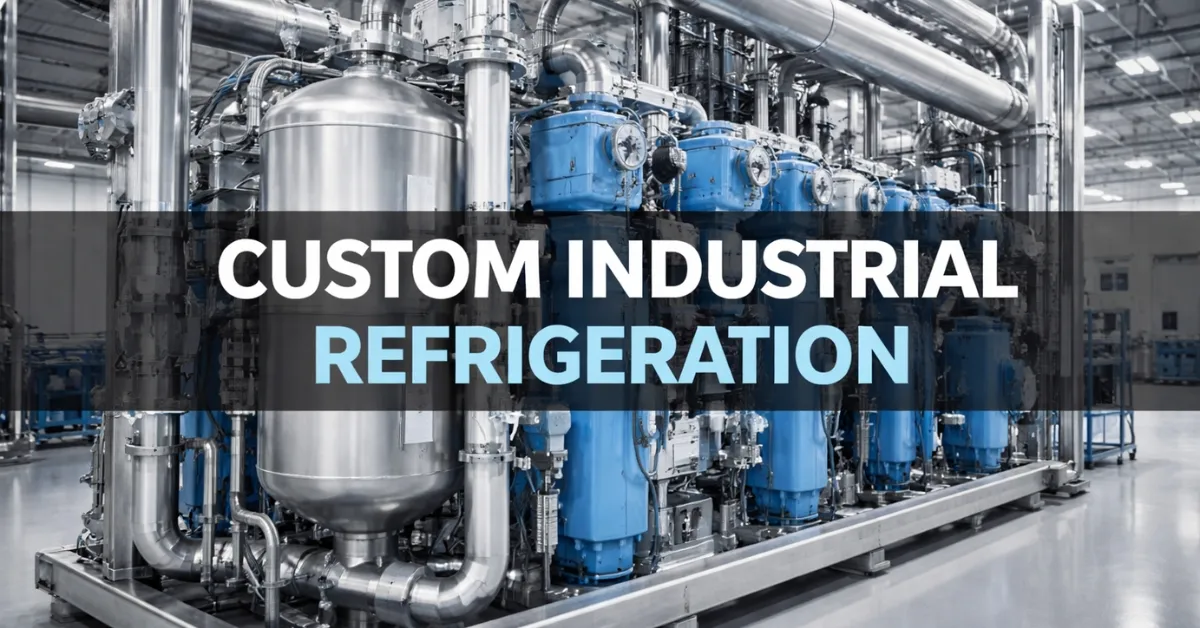
Industrial refrigeration infrastructure plays a central role here. For large-scale operations—food processing plants, cold storage warehouses, and distribution hubs custom ammonia industrial refrigeration systems are widely used due to their efficiency and reliability at scale. Ammonia is a natural refrigerant with excellent thermodynamic properties and a long track record in food industry applications.
Regardless of the system used, regular maintenance and calibration are essential. A refrigeration unit running even a few degrees warmer than its set point can push food into the danger zone without triggering any visible alarm.
Essential Safety Guidelines for Commercial Kitchens and Home Storage
Sound temperature practices don’t begin and end at the industrial level. Commercial kitchens and home environments are where temperature management most directly affects the people eating the food.
Commercial Kitchen Guidelines
- Hot foods must be held at 140°F (60°C) or above. Chafing dishes, steam tables, and heat lamps should be monitored regularly with calibrated thermometers.
- Cold foods must be held at 40°F (4°C) or below. Salad bars and cold display cases require consistent checking throughout service.
- Cool cooked foods rapidly. Large batches should be divided into shallow containers and moved into refrigeration quickly—the goal is to drop the temperature from 140°F to 70°F (21°C) within two hours, and from 70°F to 40°F within an additional four hours.
- Thaw food safely. The refrigerator, cold running water, and the microwave (if cooking immediately after) are all acceptable methods. Countertop thawing at room temperature is not.
- Use a calibrated probe thermometer to verify internal cooking temperatures. Visual cues—color, juiciness, texture—are not reliable indicators of doneness.
Home Storage Tips
- Refrigerators should be set to 37°F (3°C)—cold enough to inhibit bacterial growth without freezing leafy greens or causing chill injury to sensitive produce.
- Freezers should be at 0°F (-18°C) to halt microbial activity entirely and preserve quality over longer storage periods.
- Don’t overload the refrigerator. Air needs to circulate to maintain consistent temperatures throughout the unit. Packed shelves create warm pockets that accelerate spoilage.
- Store raw meat on the lowest shelf, always beneath ready-to-eat foods, to prevent cross-contamination from drips.
- Label and date leftovers. Most cooked foods remain safe in the refrigerator for three to four days. When in doubt, discard.
Conclusion
Temperature control is one of those disciplines that looks easy until something goes wrong. A refrigerator that quietly warms overnight, a delivery truck whose refrigeration unit falters mid-route, a buffet dish left out an hour too long—these are the events that lead to product losses, recalls, and, in the worst cases, serious illness.