
Quick Summary
One size does not fit all: A stroller blanket (30″x40″) won’t work well as a secure swaddle (47″x47″).
Safety Rule #1: The American Academy of Pediatrics (AAP) recommends keeping the crib bare (no loose blankets) for the first 12 months to prevent SIDS.
Best Swaddle Size: Look for at least 47″ x 47″ squares; smaller blankets often pop loose when the baby kicks.
Material Matters: Cotton and muslin are breathable standards, while bamboo offers durability against shrinkage.
When it comes to preparing for a new baby, one of the most important purchases is a perfect baby blanket. It provides warmth, comfort, and a sense of security to your little one.
However, choosing the right size of baby blanket can be a bit tricky, as it needs to offer just the right amount of coverage while being safe and comfortable. In this guide, we’ll take a deep dive into everything you need to know about baby blanket sizes, helping you pick the best one for your baby.
Baby Blanket Size Chart (Inches & CM)
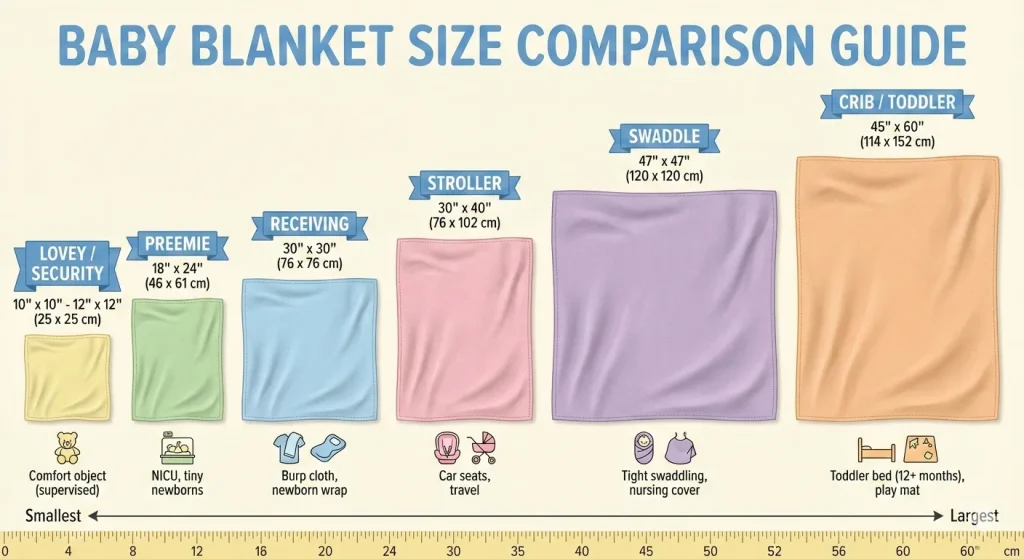
For a quick reference, here are the standard dimensions for the most common types of baby blankets found on the market today.
| Blanket Type | Dimensions (Inches) | Dimensions (CM) | Best Use Case |
| Lovey / Security | 10″ x 10″ to 12″ x 12″ | 25 x 25 cm | Comfort object for cuddling (supervised) |
| Preemie | 18″ x 24″ | 46 x 61 cm | NICU, tiny newborns, incubators |
| Receiving | 30″ x 30″ | 76 x 76 cm | Burp cloth, changing pad, newborn wrap |
| Stroller | 30″ x 40″ | 76 x 102 cm | Car seats, strollers, travel |
| Swaddle | 47″ x 47″ | 120 x 120 cm | Tight swaddling, nursing cover, play mat |
| Crib / Toddler | 45″ x 60″ | 114 x 152 cm | Toddler bed (12+ months only), play mat |
Comprehensive Breakdown by Blanket Type
1. Swaddle Blankets (40″–48″ Square)
If you plan to swaddle your baby to mimic the womb and prevent the startle reflex, size is the most critical factor. While older standard blankets were smaller, the modern “gold standard” for a secure swaddle is roughly 47″ x 47″.+3
- Why size matters: A blanket smaller than 40 inches often comes loose when a baby kicks, which can wake them up or pose a safety hazard. The extra fabric allows for the “Diamond Fold” technique that keeps the wrap secure.+1
- Material: Muslin is a top choice because it is lightweight and breathable, preventing overheating while keeping the baby snug.+2
2. Receiving Blankets (30″ x 30″)
Often called the “Swiss Army Knife” of baby gear, receiving blankets are typically smaller squares made of cotton or flannel. You will likely receive several of these from the hospital.+2
- Best Uses: While they are often too small to swaddle a growing infant securely, they are perfect for use as burp cloths, changing pad covers, or for wiping up spills.+1
- Lifespan: Babies typically outgrow these for wrapping purposes within the first few weeks.+2
3. Stroller & Carriage Blankets (30″ x 40″)
Unlike the square swaddle or receiving blankets, stroller blankets are usually rectangular.+1
- Function: They are sized specifically to tuck into a stroller or car seat without dragging on the ground or getting tangled in wheels.+1
- Versatility: These are excellent for keeping a baby warm during outdoor walks or shielding them from wind and light rain.
4. Crib Blankets (45″ x 60″)
These larger blankets are designed to fit a standard crib mattress.+1
- Safety Warning: Despite the name, crib blankets should not be used in a crib with an infant under 12 months old. The AAP advises that loose bedding increases the risk of SIDS and suffocation.+4
- When to use: These are perfect for toddlers transitioning to a toddler bed, or for use as a floor playmat for tummy time before the baby turns one.+1
5. Lovey and Security Blankets (12″ x 12″)
These are tiny blankets, often attached to a small stuffed animal or featuring a satin edge. They are designed for comfort rather than warmth.
- Purpose: A lovey helps a baby feel secure and can become a cherished transitional object.
- Dimensions: They are small (typically 12 inches square) to be easily held by little hands and to minimize suffocation risks.
Why Is Baby Blanket Size So Important?
The size of a baby blanket is more than just about providing warmth. It ensures your baby’s safety and comfort, while also offering the versatility to grow with your child. A blanket that is too small may not provide adequate warmth, while one that is too large could pose safety risks, especially if it’s used improperly.
Baby blankets come in different sizes for a reason. Babies grow quickly, and the blanket you use for a newborn may not be suitable for a toddler. Choosing the right size allows the blanket to serve multiple functions, from swaddling to nap time, and eventually becoming a comfort item as your child gets older.
What Factors Should You Consider When Choosing Baby Blanket Size?
When selecting the right size blanket for your baby, there are a few important factors to consider. These will help you determine which size is best suited for your baby’s specific needs.

1. Age and Stage of Development
The size of the blanket you choose will vary depending on your baby’s age. For newborns, smaller, more compact blankets are often the best choice. As your baby grows, you’ll need to switch to larger blankets to ensure they’re comfortable and well-covered. Always choose a blanket that fits your baby’s current stage of development.
2. Functionality
Consider what the blanket will be used for. Swaddle blankets and receiving blankets are primarily used for warmth and security during the early days of a baby’s life. As your baby grows, the blanket may be used for nap time, comfort, or even as part of the baby’s bedtime routine. A blanket that can serve multiple purposes is always a great investment.
3. Material
The material of the blanket can also influence the overall size and how your baby uses it. For example, a heavier blanket for colder months may need to be a bit larger to provide ample warmth. On the other hand, a lightweight muslin blanket may be smaller while still offering comfort and breathability during warmer weather.
4. Safety Considerations
When it comes to baby blankets, safety is paramount. Never use a blanket that is too large for your baby, as this can pose a suffocation risk. Blankets should be used with care, especially during the infant stages, to prevent the risk of over-heating or becoming tangled. Always ensure that the blanket fits your baby properly and is used safely, in accordance with the current sleep guidelines.
5. Durability
Another important factor is the durability of the blanket. Babies can be messy, and the blanket will need to withstand frequent washing. Opt for blankets made from durable fabrics that will stand up to the wear and tear of daily use.
How to Use Baby Blankets Safely
As we discussed, the right size of baby blanket plays a pivotal role in your baby’s comfort and safety. However, safety isn’t just about size; it’s also about how you use the blanket. Here are some important safety tips to keep in mind when using baby blankets:
1. Avoid Loose Blankets in the Crib
According to the American Academy of Pediatrics (AAP), loose bedding, including blankets, pillows, and stuffed animals, can increase the risk of suffocation and Sudden Infant Death Syndrome (SIDS). It’s best to use a fitted crib sheet and keep any blankets away from the baby during sleep. Instead of using a large blanket, consider using a sleep sack or wearable blanket, which are designed to keep babies warm without the risk of loose fabric.
2. Use the Blanket for Swaddling Only When Appropriate
Swaddle blankets are incredibly useful for calming newborns, but once your baby starts to roll over, you should stop swaddling them. Swaddling after this stage can be dangerous as it restricts movement and may lead to overheating. Make sure to monitor your baby’s development and stop swaddling when it’s no longer safe.
3. Monitor Blanket Usage at Nap Time
When your baby takes a nap, always monitor how they are using their blanket. Ensure it covers them just enough to keep them warm without posing any risk of covering their face. It’s important to keep an eye on the blanket’s positioning and remove it if it shifts during sleep. For older babies, using a thinner blanket can reduce the risk of overheating.
4. Choose Breathable Fabrics
The fabric of the baby blanket plays an essential role in comfort and safety. Opt for breathable materials such as cotton, muslin, or bamboo, which help regulate your baby’s body temperature. Avoid heavy, non-breathable fabrics that can trap heat and cause your baby to overheat. Muslin blankets, for example, are light, breathable, and ideal for year-round use.
5. Proper Washing and Care
Baby blankets, especially those used frequently, should be washed regularly to remove dirt, oils, and bacteria. Always check the washing instructions for the specific fabric of the blanket and ensure it’s washed with gentle detergents suitable for babies. Many baby blankets are machine washable, but it’s essential to check the care label to ensure longevity and softness.
How to Choose a Blanket for Different Seasons
Seasonal changes are another key factor in choosing the right baby blanket. A blanket that works well during the colder months may not be suitable for warmer weather. Here’s how to choose the best blanket for different seasons:
1. Winter Blankets
During the colder months, your baby will need a thicker, warmer blanket. Fleece, wool, or a quilted blanket can provide the insulation necessary to keep your baby warm. However, always ensure the blanket is breathable and not too heavy to avoid overheating.
2. Summer Blankets
In summer, a lightweight, breathable fabric like cotton or muslin is best for your baby. These materials help keep your baby comfortable without trapping too much heat. A lighter receiving blanket or swaddle blanket is ideal for warm weather, offering comfort without excess warmth.
3. Transitional Seasons (Spring/Fall)
During the transitional seasons, choose a blanket that offers moderate warmth without being too heavy. A medium-weight cotton or bamboo blanket works well for spring or fall, ensuring your baby stays comfortable without sweating.
Conclusion: Choosing the Right Baby Blanket Size
Selecting the perfect baby blanket size is essential for your baby’s comfort, warmth, and safety. With various sizes available, you can ensure that your little one is cozy and secure throughout their development stages. From swaddles to toddler blankets, choosing the right size will provide your baby with the comfort they need while growing up. Always keep in mind the fabric, function, and safety when selecting your baby’s blankets.
By considering these guidelines and understanding the different types of baby blankets, you can make the best decision for your baby’s well-being and ensure they stay comfortable for years to come.
FAQs
What size baby blanket do I need for a newborn?
For a newborn, a swaddle blanket measuring 36” x 36” is ideal. It provides enough room for a secure swaddle, ensuring comfort and warmth for your little one.
When can my baby use a regular crib blanket?
Crib blankets are typically used after the first few months, once your baby no longer needs to be swaddled. They are ideal for nap time and nighttime sleep.
Can I use a toddler blanket for a newborn?
Toddler blankets (50” x 60”) are much too large for a newborn and can pose a safety risk if used during sleep. Stick with swaddle or receiving blankets for newborns.
What fabric is best for baby blankets?
Cotton, muslin, and bamboo are all great fabric choices for baby blankets. These materials are breathable, soft, and gentle on your baby’s delicate skin.
How often should I wash my baby’s blanket?
Baby blankets should be washed regularly, especially if they’re used during nap times or have been soiled. Be sure to follow the care instructions on the label to maintain the blanket’s quality and softness.